

 By
By Introduction
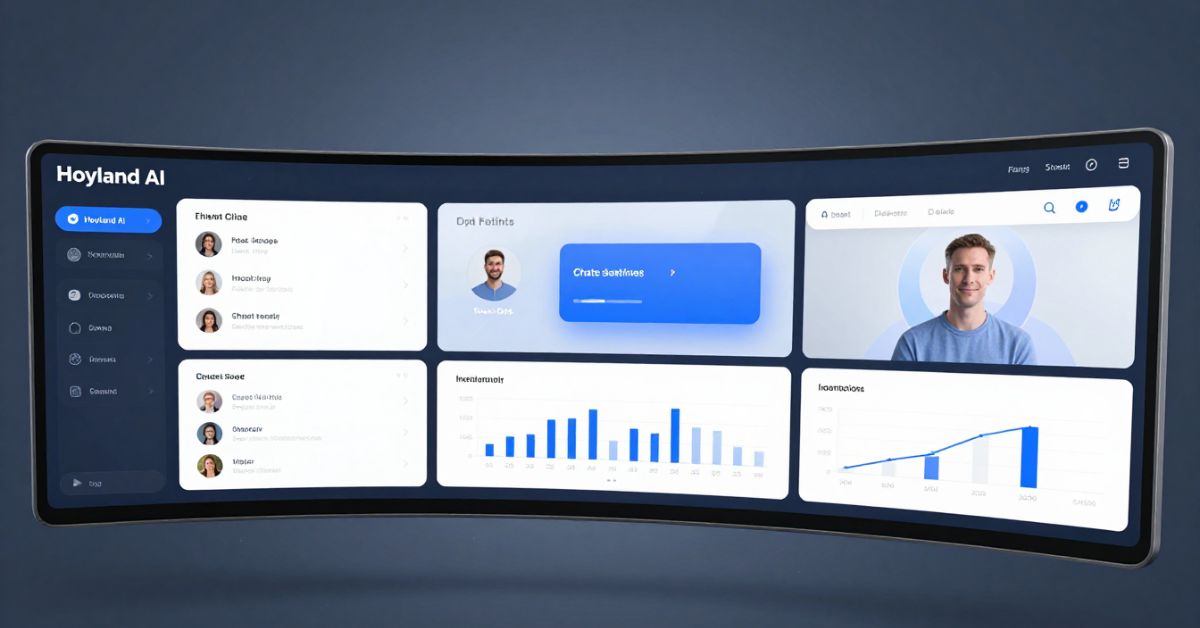
Customer communication has transformed dramatically in the past decade. Businesses can no longer rely solely on static FAQs or email support systems. Today, intelligent automation is essential for maintaining competitive advantage. Hoyland AI stands out as a platform designed to build, deploy, and manage virtual agents across chat and voice channels while maintaining enterprise‑level governance.
According to its positioning, Hoyland AI combines a no‑code conversation builder, unlimited intent recognition, and generative AI functionality protected by enterprise guardrails. This blend allows organisations to automate interactions while preserving security, compliance, and control.In this article, we will explore what Hoyland AI is, how it works, why conversational AI matters in 2026, and how it fits into modern digital infrastructure strategies.
What Is Hoyland AI?
Hoyland AI is a conversational automation platform that enables organisations to create and manage virtual agents capable of handling customer interactions across multiple channels.
Unlike traditional scripted chatbots, this platform integrates both structured intent-based logic and generative AI capabilities. The result is a hybrid system capable of dynamic, contextual responses while remaining aligned with organisational policies.
At its foundation, Hoyland AI focuses on three operational pillars:
- Building conversations through visual design tools
- Deploying agents across digital environments
- Managing performance and compliance centrally
This integrated approach reduces friction between technical teams and business departments.
Why Virtual Agents Are Critical in 2026
The global shift toward digital-first engagement has accelerated demand for automated support systems. According to Gartner’s 2026 Customer Service Outlook, a majority of customer interactions now involve AI-driven automation in some capacity.
Virtual agents serve multiple roles:
- Handling repetitive enquiries
- Supporting high-volume traffic
- Reducing operational costs
- Enhancing response times
Businesses may sustain service consistency even during periods of high demand by implementing structured conversational AI solutions.As companies grow internationally and handle cross-border compliance responsibilities, the significance of scalability and governance has increased.
Build, Deploy, and Manage: The Operational Framework
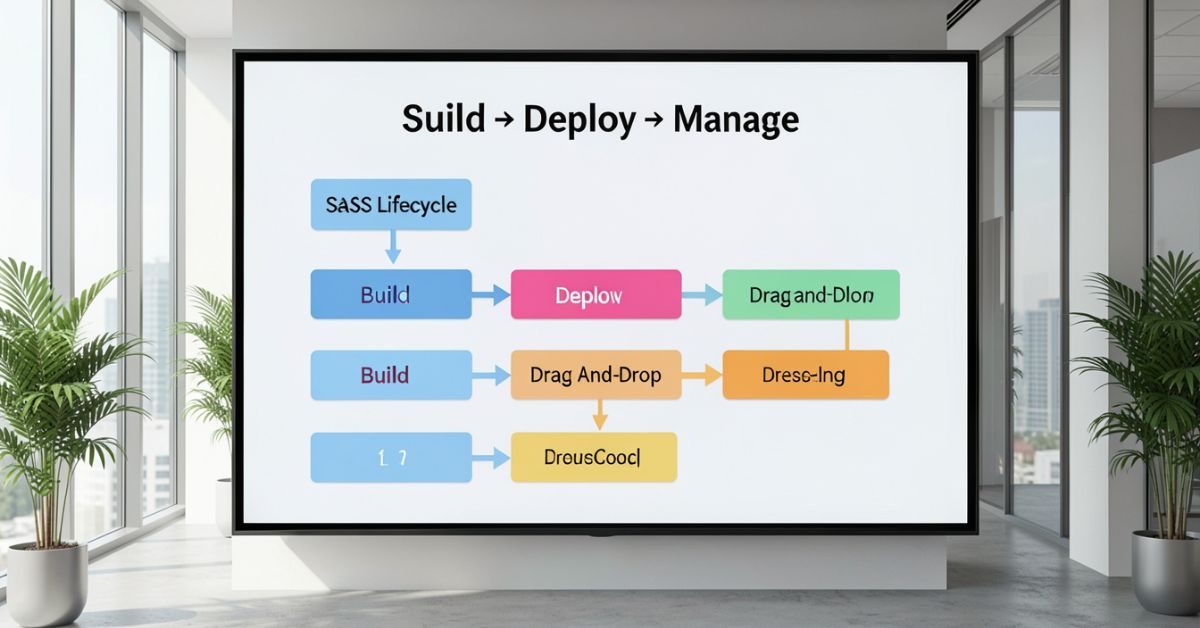
The architecture of Hoyland AI revolves around simplicity combined with scalability.
Building Conversations
The no‑code conversation builder allows teams to design structured dialogue flows using a visual interface. Instead of requiring programming knowledge, users define conversation branches, decision logic, and intent categories through modular blocks.
This empowers marketing, operations, and support teams to participate in conversational design without depending solely on developers.
Managing Performance
Administrators monitor analytics dashboards that track:
- Conversation completion rates
- Intent accuracy
- Escalation frequency
- Response timing
These insights support ongoing optimisation.
No-Code Conversation Builder in Depth
One of the platform’s most attractive features is its visual conversation builder. Traditional chatbot systems often required manual scripting, which slowed adoption and limited flexibility.
With a no-code interface, teams can:
- Drag and drop conversation elements
- Define user intents
- Configure fallback responses
- Connect APIs for external data retrieval
| Capability | Operational Advantage |
| Visual Design | Faster onboarding |
| Intent Mapping | Improved accuracy |
| API Integration | Seamless backend connectivity |
| Template Libraries | Reduced setup time |
The ability to iterate quickly encourages continuous refinement.
Unlimited Intents and Smart Routing
Intent recognition is at the heart of conversational AI. A system’s replies grow more successful the more precisely it determines the intent of the user.Scalable intent management is supported by Hoyland AI, enabling businesses to manage a broad range of enquiries without strict limitations.
Intelligent routing ensures that when queries exceed automation boundaries, they are transferred to human agents smoothly. This hybrid approach prevents frustration and maintains service quality.The combination of automation and escalation preserves a balance between efficiency and empathy.
Generative AI with Enterprise Guardrails
Generative AI enables flexible, context-aware responses. However, without safeguards, generative models may produce inconsistent or non-compliant output.
Hoyland AI incorporates enterprise guardrails to mitigate risks. These safeguards may include:
- Content moderation layers
- Pre-approved knowledge sources
- Access controls
- Audit logs
| AI Function | Guardrail Mechanism |
| Dynamic Responses | Policy validation filters |
| Knowledge Retrieval | Approved data libraries |
| Context Memory | Controlled session tracking |
This structure enables adaptability while maintaining governance.
Comparing Hoyland AI to Traditional Chatbots
Traditional rule-based chatbots operate on predefined scripts. While reliable for simple interactions, they lack contextual depth.
| Traditional Chatbots | Hoyland AI |
| Static scripts | Hybrid generative logic |
| Limited intent scaling | Flexible intent expansion |
| Basic analytics | Advanced performance metrics |
| Manual updates | Continuous learning model |
The shift from static bots to adaptive systems reflects broader advancements in AI capabilities.
Use Cases Across Industries
Conversational automation is no longer limited to customer service. Industries integrating platforms like Hoyland AI include healthcare, finance, retail, and enterprise IT.
In healthcare, virtual agents can assist with appointment scheduling and policy explanations. Internal enterprise applications are equally significant. HR departments deploy virtual assistants to answer policy questions. IT teams use automation to streamline help desk requests.This cross-industry flexibility highlights the scalability of the model.
Security and Compliance Considerations
Security remains a top priority for enterprise AI systems. Hoyland AI integrates governance features that align with regulatory standards.
These features often include encrypted communications, access controls, and compliance logging. Organisations operating under GDPR or industry-specific regulations benefit from centralised oversight.Strong compliance infrastructure builds trust and reduces operational risk.
The Future of Conversational AI
The next evolution of conversational platforms will likely integrate advanced personalisation and predictive support models.
Future developments may include:
- Sentiment analysis integration
- Voice biometrics
- Cross-channel contextual continuity
- Predictive customer support suggestions
Conversational systems are evolving from reactive tools to proactive digital assistants.
Businesses that implement enterprise-ready platforms early position themselves for long-term innovation leadership.
FAQs
What is Hoyland AI used for?
It creates and oversees virtual agents for voice and chat services.
Does it require coding knowledge?
No, it offers a no-code conversation builder.
Can it scale for enterprises?
Yes, it supports unlimited intents and multi-channel deployment.
Is generative AI included?
Yes, with enterprise guardrails for security and compliance.
Is it suitable for regulated industries?
It includes compliance and governance features designed for enterprise environments.
Conclusion
Hoyland AI represents a structured and secure approach to conversational automation. By combining no-code development, scalable intent management, and generative AI with enterprise safeguards, it empowers organisations to modernise communication strategies responsibly.
As digital interactions continue to evolve, platforms that balance innovation with governance will shape the next generation of customer engagement.