

 By
By Introduction
Team Disquantified in 2025 requires more than spreadsheets and endless email threads. Organisations now operate across time zones, hybrid offices, and digital platforms that demand clarity and coordination. Team‑disquantified is built around the idea of managing your team efficiently with smarter workflows, better task tracking, and improved collaboration.
According to its guiding principle, team‑disquantified helps organisations streamline operations through an integrated management platform. Instead of juggling disconnected tools, teams work within a centralised environment designed to reduce friction and improve visibility.In this guide, we explore how team‑disquantified connects to modern digital workflows, how it supports collaboration, and why structured management platforms are becoming essential for growth-orientated teams.
What Is Team‑Disquantified?
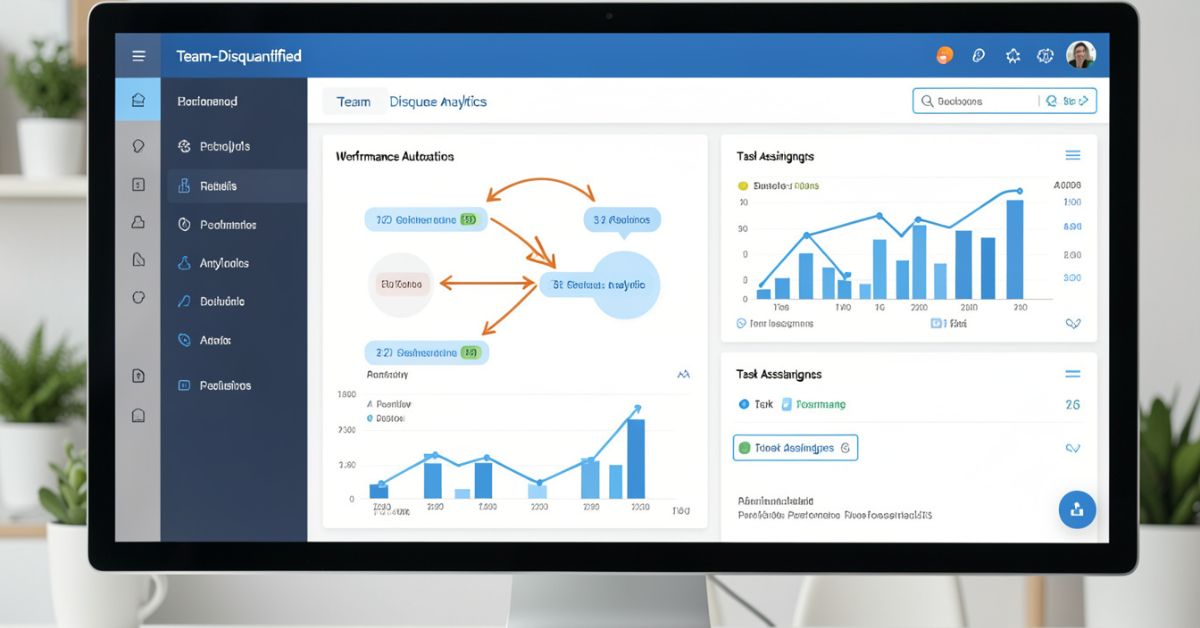
Team‑disquantified is a collaborative management platform designed to simplify how teams organise work. Rather than focusing solely on task lists, it combines workflow structure, communication clarity, and performance tracking into one system.
The concept behind it centres on efficiency. Teams often struggle because work is scattered across tools. A structured management system consolidates responsibilities, deadlines, and updates into a unified dashboard.Instead of chasing information across platforms, team members operate within a shared digital workspace that enhances transparency.
Why Team Efficiency Matters Today
The modern workplace is no longer confined to a single office. Distributed teams rely heavily on digital tools. Without proper structure, this can lead to confusion and inefficiency.
Common challenges include:
- Overlapping responsibilities
- Missed deadlines
- Miscommunication
- Delayed approvals
- Uneven workload distribution
Organisations that implement integrated team management platforms typically see measurable productivity improvements. According to a 2025 workplace productivity report, teams using structured collaboration tools reported reduced project delays and higher accountability.
Core Capabilities of Team‑Disquantified
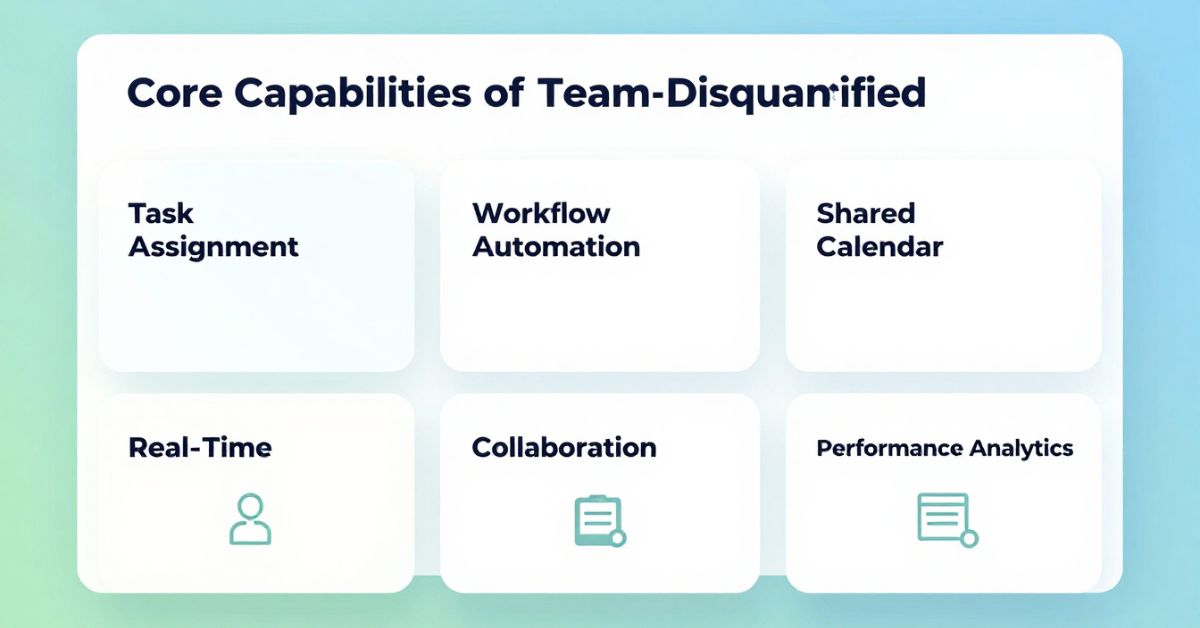
The strength of team‑disquantified lies in how it centralises operations while keeping the interface intuitive.
Its primary functions include:
- Task assignment with clear ownership
- Deadline management
- Workflow automation triggers
- Shared project dashboards
- Real‑time collaboration tools
| Capability | Impact on Teams |
| Centralized Task Board | Improves visibility |
| Automated Workflow Triggers | Reduces manual reminders |
| Shared Calendar | Enhances scheduling accuracy |
| Performance Analytics | Supports informed decisions |
These capabilities help align strategy with execution.
How It Improves Workflow Structure
Effective workflows follow predictable stages: planning, execution, review, and completion. Without structure, tasks can stall between stages.
Team‑disquantified supports structured progression. When a task moves from one phase to another, the system updates stakeholders automatically. This reduces dependency on manual follow‑ups.For example, once a draft is completed, the review stage activates instantly. Managers receive notifications, deadlines adjust, and progress metrics update in real time.This flow eliminates ambiguity and keeps projects moving forward.
Collaboration in Remote and Hybrid Environments
Remote work is now a permanent fixture in many industries. Collaboration tools must support asynchronous communication and equal access to information.
Team‑disquantified ensures that every member can
- Access shared updates
- View project status
- Contribute feedback
- Track progress independently
This structured transparency strengthens accountability while maintaining flexibility.
Rather than relying on scattered messages, communication remains contextual within each task.
Comparing Traditional Team Tools
Many organisations use separate tools for messaging, project management, and scheduling. This fragmentation can create confusion.
| Traditional Setup | Integrated Platform |
| Email for updates | Centralized notifications |
| Spreadsheets for tracking | Automated dashboards |
| Manual reporting | Real‑time analytics |
| Multiple logins | Unified interface |
By consolidating processes, the team‑disquantified reduces operational complexity.
Performance Tracking and Accountability
Data-driven management allows leaders to identify bottlenecks before they escalate. Performance dashboards display progress metrics clearly.
Managers can monitor:
- Completion rates
- Workload distribution
- Milestone achievement
- Timeline adherence
Rather than guessing where delays occur, leadership can adjust resources accordingly.
Accountability improves when responsibilities are visible to the entire team.
Scaling for Growing Organisations
Growth introduces new challenges. As teams expand, manual coordination becomes unsustainable.
Team‑disquantified supports scalability through the following:
- Modular workflow templates
- Role-based access controls
- Department-level customisation
- Automated reporting summaries
This flexibility allows small teams to start simply and expand without redesigning their entire management system.
Scalable architecture ensures long-term relevance.
Future Trends in Team Management
The future of team management platforms includes increased automation and predictive insights. AI-assisted workload balancing and smart deadline forecasting are becoming standard features.
Emerging innovations may include:
- Predictive risk alerts
- Intelligent task prioritisation
- Automated summary generation
- Adaptive performance recommendations
Team‑disquantified aligns with these trends by focusing on structured digital workflows that evolve with organisational needs.
Practical Implementation Strategy
Organisations adopting team‑disquantified principles should begin with an operational audit. Identify inefficiencies and communication gaps before implementing changes.
A structured rollout may include:
- Mapping existing workflows
- Defining clear ownership roles
- Automating repetitive steps
- Monitoring performance metrics
- Adjusting processes iteratively
Gradual integration ensures smoother adoption.
FAQs
What is team‑disquantified?
It is a structured platform for managing tasks, collaboration, and workflows efficiently.
Is it suitable for remote teams?
Yes, it supports distributed collaboration and transparent tracking.
Does it replace email?
It centralises communication within task-based contexts.
Can small businesses use it?
Yes, it scales from small teams to enterprise environments.
Does it include analytics?
Yes, it offers dashboards for performance tracking.
Conclusion
Team‑disquantified represents a modern response to the growing complexity of team management. By integrating task tracking, communication, and automation into a unified system, it helps organisations reduce confusion and increase productivity.
As workplaces continue evolving, structured digital collaboration platforms will become essential infrastructure rather than optional tools.